
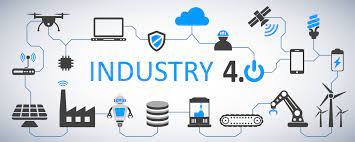
As technology continues to advance, companies are looking for ways to use artificial intelligence (AI) to improve their operations. Generative AI is one of the most powerful tools available to unlock the potential of Industry 4.0 solutions. It enables companies to optimize and integrate data, processes and systems to increase efficiency and productivity. In this blog post we will examine how generative AI can be used to improve Industry 4.0 solutions and why it is a crucial part of the future of Industry 4.0. We will examine how generative AI can be used to automate complex tasks, generate insights and optimize overall systems for maximum productivity. Additionally, we will discuss how industry giants like Siemens and Microsoft are trying to integrate generative AI into product lifecycle management. Finally, we will examine how generative AI can be used to improve plant performance and quality control. By harnessing the power of this technology, companies can get closer to Industry 4.0 goals.
Introduction to Generative AI and Industry 4.0
Generative AI is an artificial intelligence research area focused on creating content based on given constraints. Generative AI (GenAI) is a type of artificial intelligence that can create a variety of data such as images, videos, audio, text, and 3D models. It does this by learning patterns from existing data and then using that knowledge to generate new and unique results. This allows complex solutions to be designed for different problems, also in connection with Industry 4.0, also known as the fourth industrial revolution, is an advancement in manufacturing technology characterized by automation and data sharing in manufacturing technologies and processes. Generative AI enables companies to optimize and integrate data, processes and systems to increase efficiency and productivity within Industry 4.0 solutions. Generative AI uses sophisticated algorithms to generate new outputs from existing input parameters, such as text or images, without requiring manual input from users or external sources. This allows for the automated creation of products to given specifications while reducing the labor costs associated with traditional design practices such as coding or engineering from scratch each time a change is required, thereby increasing the speed-to-market of products and services while reducing the cost of production and the performance outcomes are optimized in real-time along their life cycle phases (e.g. development/manufacturing). In addition, generative AI can help reduce waste through better process control by predicting potential problems before they occur, allowing companies to preemptively address them before there are disruptions to production lines or customer service delivery cycles.
Benefits of Generative AI for Industry 4.0 Solutions
Generative AI offers a number of powerful benefits for Industry 4.0 solutions, including increased efficiency and productivity, automation of complex tasks, generated insights and optimization of systems. Generative AI algorithms can quickly generate data-driven models that provide predictive accuracy for decision-making in manufacturing operations and processes. This results in improved plant performance and reduced downtime as potential problems can be more accurately predicted before they occur. Additionally, generative AI enables companies to automate complex tasks such as programming or engineering design from the ground up without incurring the human labor costs associated with traditional design practices, saving time in the product development cycle as well as money spent on costly manual labor resources. The insights generated by generative AI help companies to gain valuable insights into the performance of their products across the entire lifecycle phases (e.g. development/manufacturing). With this type of information, companies can better anticipate customer needs while optimizing quality control standards by proactively detecting anomalies in production lines or customer service delivery cycles. Additionally, generative AI facilitates system optimization by helping streamline overall processes, resulting in fewer errors during production or post-production operations, such as shipping delays when customers purchase items online.
Generating Insights with Generative AI
With generative AI, insights can be generated that enable companies to better understand customer needs and optimize their processes. Using generative AI to generate insights requires using natural language processing (NLP) technologies to analyze data, applying machine learning algorithms to generate predictive models, and implementing deep learning algorithms to extract meaningful information from the generated models. NLP is a form of artificial intelligence that enables machines to interpret written or spoken human language to generate actionable insights. By using NLP technologies, companies can quickly spot trends in customer behavior or spot anomalies across multiple data sets. Machine learning algorithms then use this data as input parameters when building predictive models that provide high-precision predictions about possible future outcomes. In addition to these models, deep learning algorithms are used to generate even more detailed information, such as identifying patterns in customer feedback and analyzing images for product defects early in the manufacturing process cycle.
ChatGPT and Other Generative AI Tools for Industry 4.0
ChatGPT and other generative AI tools are powerful solutions that help industrial companies design and innovate more efficiently. These tools use advanced algorithms such as Generative Adversarial Networks (GANs), Variational Autoencoders (VAEs), and Transformers to generate content based on predetermined specifications without requiring manual input from users or external sources. This enables companies to quickly create products with desired properties, reducing time in product development cycles while saving costs associated with traditional design practices with each required change. Generative AI also helps reduce waste by predicting potential problems before they occur. Additionally, these tools allow companies to gain valuable insights into the performance of their products across the lifecycle stages, which can be used to optimize quality control standards across different delivery cycles, resulting in higher customer satisfaction.
However, when implementing ChatGPT and other generative AI tools in Industry 4.0 solutions, there are some challenges due to compatibility issues between different platforms, data security concerns when exchanging sensitive information between systems, and training requirements for the personnel using the technology effectively. Despite these challenges, the use of ChatGPT and other generative AI tools offers clear advantages that outweigh the risks involved and ultimately allow companies to move closer to their Industry 4.0 goals faster than before.
Siemens and Microsoft’s Collaboration to Integrate Generative AI with Product Lifecycle Management
Siemens and Microsoft have teamed up to integrate generative AI into product lifecycle management and thus optimize complex processes for industrial companies. The collaboration includes the new Teamcenter app for Microsoft Teams, which was released around April 2023. Siemens and Microsoft claim that integrating their technologies will enable designers, frontline workers and teams across all business functions to enjoy close feedback loops faster and solve challenges together. With this Teamcenter app for Microsoft Teams, millions of employees who don’t have access to PLM tools today can more easily influence the design and manufacturing process as part of their existing workflows. The two companies are also collaborating to help software developers and automation engineers accelerate code generation for programmable logic controllers (PLCs) using OpenAI’s ChatGPT and other Azure AI services. According to Siemens and Microsoft, development teams can use ChatGPT to significantly reduce time and reduce the likelihood of errors by generating PLC code through natural language input. These capabilities can also enable maintenance teams to identify errors faster and generate step-by-step solutions. Additionally, the Siemens and Microsoft collaboration is exploring ways to leverage generative AI for automated design processes to further streamline complex process flows, including optimizing supply chain efficiency through more accurate forecasting capabilities powered by generative AI technologies.
Conclusion
Generative AI is a powerful tool that can be used to optimize complex processes and automate them efficiently within Industry 4.0 solutions. By leveraging advanced algorithms such as GANs, VAEs, and Transformers, companies can quickly create products with desired properties while reducing the costs associated with traditional design practices. Generative AI enables companies to gain insights into the performance of their products across all phases of the life cycle. This helps companies better anticipate customer needs while optimizing quality control standards by proactively detecting anomalies in production lines or customer service delivery cycles before they occur. In addition, generative AI facilitates system optimization, resulting in fewer errors during production or post-production operations, such as shipping delays. This helps reduce waste through better process control while allowing companies to take preventive action instead of wasting resources when issues arise due to improved plant performance, resulting in higher customer satisfaction across different supply cycles.
Examples of companies leveraging generative AI for Industry 4.0 include the Siemens and Microsoft collaboration that integrates generative AI into product lifecycle management to optimize complex process flows, including optimizing supply chain efficiency through more accurate forecasting capabilities based on generative AI. By harnessing the power of this technology, companies can move closer to their Industry 4.0 goals faster than ever before and ultimately gain an edge over the competition by offering superior services or products built with automated methods based on advanced algorithms that are used in generative AI tools such as ChatGPT and others.
SIMENS PLM
Cloud PLM – Teamcenter X Free Trial.
Industry-leading PLM 30-day free software trial.




 TechRusher
Leave a comment